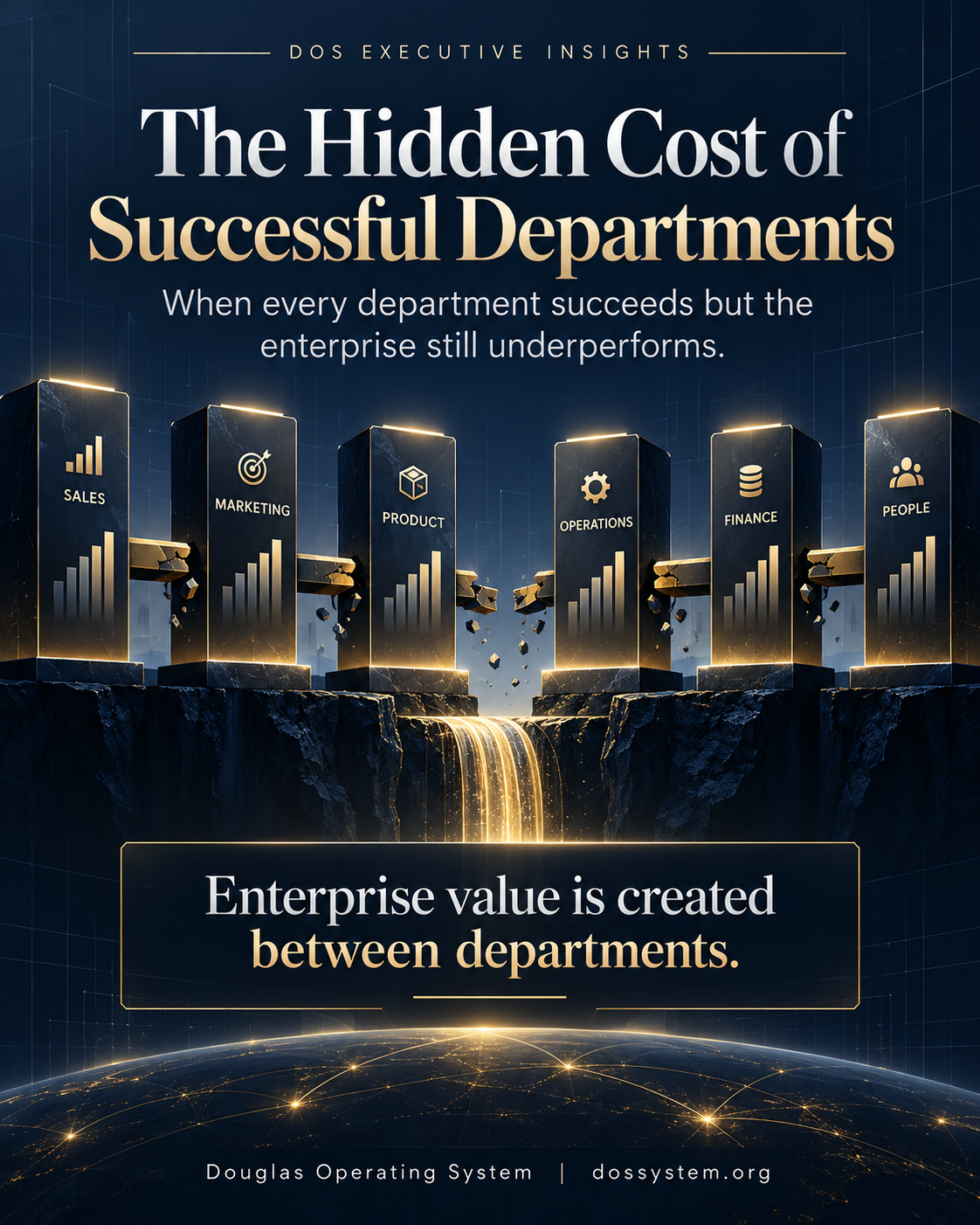
What if every department is meeting its goals—but the enterprise is still underperforming?
Sales is exceeding its targets. Operations is meeting its productivity goals. Finance is controlling expenses. IT is delivering against its commitments. Customer Support is achieving its service levels. On paper, the organization appears healthy. Yet customers are frustrated, decisions take too long, costs continue to rise, and employees spend considerable time resolving problems created somewhere else in the organization.
How can everyone be successful while the enterprise struggles? The answer may be found in how performance is defined and governed. Most organizations establish accountability vertically: department heads own budgets, staffing, targets, and results within their areas. But enterprise value frequently depends on performance horizontally—across departments, processes, decisions, and customer experiences.
Consider a simple example. Procurement negotiates a lower-cost component and achieves its savings target. Operations experiences increased equipment failures. Field Service absorbs additional labor and travel expenses. Customer Support manages the resulting complaints. Finance celebrates the procurement savings.
The department succeeded. The enterprise lost. No individual department necessarily made an irrational decision. The problem is that the organization lacked sufficient visibility and accountability for the total enterprise impact.
Make the handoff a leadership responsibility
The DOS Law Enterprise Value Is Created Between Departments™ challenges executive teams to assess the full enterprise effect of their decisions rather than celebrate only local functional benefits. DOS is designed to bring unresolved cross-functional tradeoffs into executive governance and clarify ownership of outcomes that require departments to work together.
That means asking different questions:
- What outcomes require multiple departments to succeed together?
- Where are costs, risks, and delays being transferred rather than eliminated?
- Who owns performance when responsibility crosses organizational boundaries?
- Are we improving the enterprise—or simply optimizing individual departments?
The objective is not to weaken departmental accountability. It is to extend accountability to the enterprise outcomes that departments collectively create. An organization can have excellent departments and still be a poorly performing enterprise.
Does your organization measure the total enterprise impact of departmental decisions—or primarily reward departments for achieving individual targets?
DOS presents a leadership methodology and operating architecture. The illustrations and examples here are explanatory, not claims of results from a specific independently validated DOS deployment.