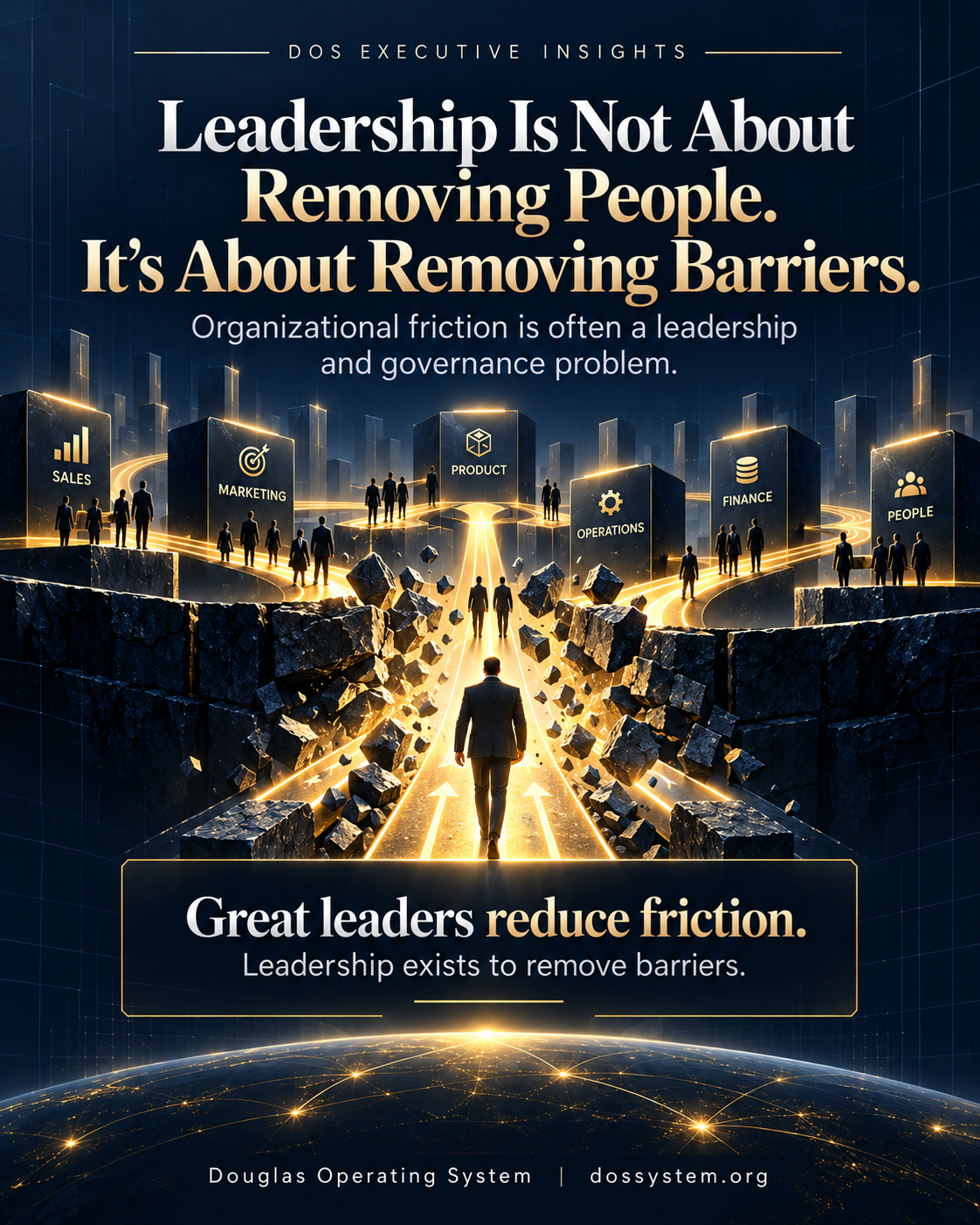
When performance falls short, many organizations react by increasing pressure on people.
Increase accountability. Set more aggressive targets. Demand faster execution. Add reporting requirements. Replace underperforming managers. Sometimes these actions are necessary. But they can overlook a more fundamental question: Have we built an operating environment in which people can actually succeed?
Consider a field service technician who consistently misses response-time expectations. The first conclusion may be poor individual performance. A closer look might reveal incomplete dispatch information, unavailable replacement parts, inaccessible equipment history, slow escalation, or conflicting priorities across departments.
The technician owns the result but cannot control many of the conditions that determine it. More pressure alone will not solve these problems. Replacing the technician may simply transfer the barriers to someone else. This is precisely where executive leadership becomes critical.
Make capability a leadership obligation
The DOS leadership architecture includes three related Laws: Leadership Exists to Remove Barriers™, Capability Before Expectation™, and Great Leaders Reduce Friction™. They connect accountability with leadership responsibility for resources, process, decision rights, information, and cooperation.
Executives should regularly ask:
- What barriers prevent our people from delivering expected results?
- Which barriers exist between departments or outside the person’s authority?
- Are employees navigating internal complexity instead of creating customer value?
- Does governance accelerate decisions—or delay them?
- Are we demanding outcomes before equipping teams to deliver them?
Accountability without capability can become a mechanism for assigning blame rather than improving results. Effective leadership addresses both performance expectations and the conditions that support them. The role of leadership is not simply to demand better outcomes; it is to create the conditions that make them possible.
When a person or team struggles, do you investigate the individual first—or the barriers surrounding the work?
DOS presents a leadership methodology and operating architecture. The illustrations and examples here are explanatory, not claims of results from a specific independently validated DOS deployment.